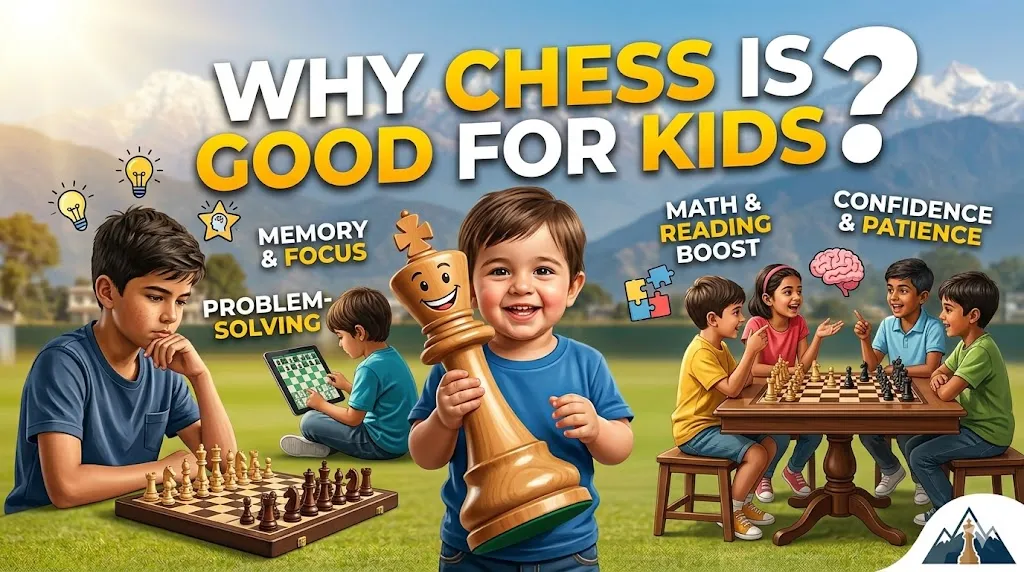
Chess is often seen as just a board game, but research shows
it does much more than entertain. For children, playing chess can
improve thinking skills, focus, problem-solving, and even academic
performance.
Parents often ask: “Should my child start chess?” The
answer is almost always yes — when approached correctly, chess provides
benefits far beyond the board.
Cognitive Benefits
1.
Improves Memory and Concentration
- Chess requires
remembering moves, strategies, and patterns.
- Studies show that
children who play chess regularly improve their working memory and
attention span.
- Example: A study
published in Applied Cognitive Psychology found that chess
instruction improved memory and problem-solving skills in children aged
7–12 (Sala & Gobet, 2016).
2.
Enhances Problem-Solving Skills
- Chess encourages children
to analyze situations, predict outcomes, and plan ahead.
- These skills transfer to schoolwork
and everyday decision-making, helping children think critically.
3.
Boosts Academic Performance
- Research indicates that
chess can improve math and reading abilities.
- Example: A meta-analysis
published in Educational Research Review concluded that chess
instruction is positively associated with academic achievement in
school-age children (Sala et
al., 2017).
Social and Emotional Benefits
- Patience
and Discipline: Chess teaches children that success comes from
thoughtful planning and persistence.
- Self-Confidence:
Winning, learning from losses, and improving skills gradually builds a
sense of accomplishment.
- Decision-Making:
Children learn to take responsibility for their moves, a skill that
applies in life and social situations.
“Chess is not just a game; it’s a tool for developing the
mind.” — American Chess Foundation (uschess.org)
Lifelong Benefits
Even if a child doesn’t become a professional chess player,
the skills gained are transferable to all areas of life:
- Strategic
thinking
- Logical
reasoning
- Emotional
resilience
- Goal
setting
Chess helps children learn how to think, not what to
think, a lesson that lasts a lifetime.
Conclusion
Chess is more than a game — it’s a tool for intellectual,
emotional, and social development. By introducing children to chess in a
supportive and fun environment, parents can help them develop skills that last
a lifetime.