Across corporate offices, commercial banks, and private institutions in
Kathmandu, a standard eight-hour workday frequently extends. Desk-bound
routines, commutes through dense traffic, and extended screen time have quietly
reshaped urban life in the valley. The physical toll of this lifestyle is
well-documented: according to a comprehensive global study published in The
Lancet Global Health by the World Health Organization (WHO), nearly
one-third (31%) of adults worldwide—roughly 1.8 billion people—do not meet
recommended physical activity benchmarks (WHO News Release, 2024). Closer to home, national public
health surveillance through the Nepal
Health Research Council STEPS Survey highlights a parallel rise in
non-communicable lifestyle risk factors linked to increasingly sedentary urban
work environments.
Yet, awareness is shifting. Over the last decade, urban residents across
Kathmandu have actively sought ways to counterbalance this sedentary pattern.
Rather than accepting desk fatigue as an unavoidable reality, people have
embraced organized active spaces. This health consciousness sparked the initial
boom of commercial futsal arenas, badminton courts, gym clubs, and swimming
facilities across the valley.
Physical fitness has established itself as an essential weekly habit. Now, another beloved sport is finding its rightful place in that ecosystem: cricket.
Urban
Density and the Struggle for Playing Space
Cricket has never lacked passion in the Kathmandu Valley; it lacked accessible ground.
Two decades of rapid, unplanned urban expansion across Kathmandu converted traditional open fields, empty neighborhood plots, and public commons into concrete residential blocks. For years, the inability to find an open pitch forced a generational shift. School-age children were pushed indoors, naturally spending their free hours immersed in mobile devices, gaming screens, and digital hangouts.
Today, parents are increasingly conscious of the cognitive and physical costs of screen dependency, actively searching for structured sports where their children can build motor skills, discipline, and stamina. Simultaneously, sports entrepreneurs recognized that the lack of open acreage didn't mean cricket had to disappear—it simply required modern infrastructure.
Just as covered turf facilities transformed neighborhood football ten years ago, dedicated cricket venues, enclosed practice nets, and synthetic wickets are now opening across the valley to reclaim the sport for city dwellers.
The
Resurgence: Global Milestones and Grassroots Energy
This infrastructural revival arrives at an exciting moment for Nepali cricket. Historic milestones by the national team in ICC global tournaments, alongside the electric commercial rise of the Nepal Premier League (NPL), have energized fans of all ages.
Cricket in Nepal is no longer an activity experienced only through a television broadcast. The excitement on screen has translated into real grassroots participation, motivating people across different age groups to pick up a bat, lace up their trainers, and step onto the turf.
Who Is
Stepping onto the Turf?
At Cricket Arena, the diversity of players visiting each week illustrates how cricket is reconnecting with the wider community:
- Aspiring Youth (Ages 6 to 16): Dedicated young players enrolled in structured coaching batches, learning proper batting stance, seam release, and athletic fielding drills with aspirations of competitive club or national selection.
- School & College Students: Teenagers and university squads looking for recreational competition, sharpening their match awareness while testing whether they want to pursue the sport professionally.
- Young Professionals: Entry- and mid-level employees using high-energy turf cricket after hours as a fun, active break from standard work routines.
- Corporate Executives & Senior Professionals (35 to 45+): Veteran professionals and corporate teams returning to their lifelong passion for cricket, finding high-intensity cardio and social camaraderie on weekend mornings and weekday evenings.
- Social & Neighborhood Groups: Friends and alumni groups reserving private net sessions to catch up, bowl a few competitive overs, and unwind through sport rather than passive restaurant meet-ups.
Under the
Lights: Solving the After-Hours Challenge
For working individuals, daylight remains the primary constraint. Leaving the office past sundown makes daytime practice impossible during regular workweeks.
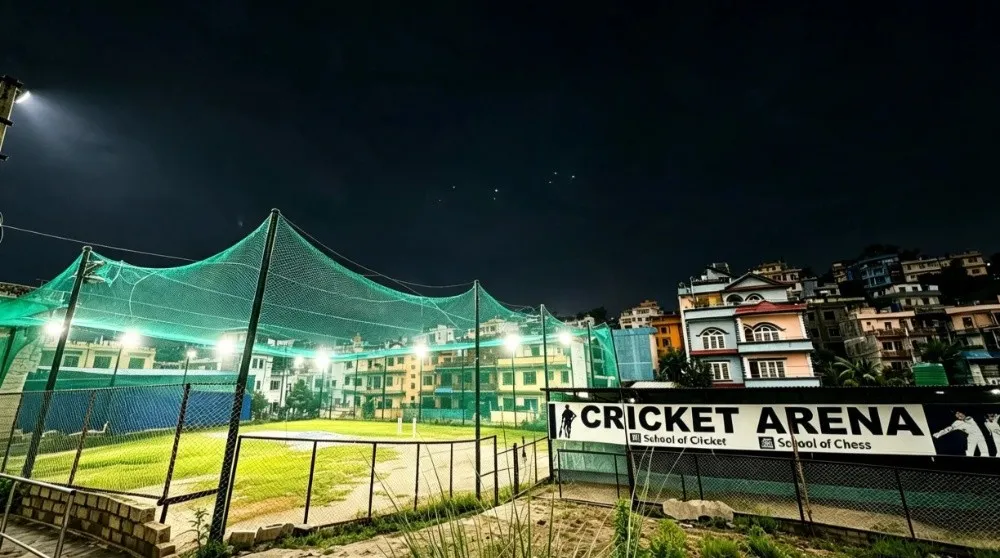
Modern venues equipped with commercial-grade LED floodlights, enclosed all-weather practice nets, and synthetic turf pitches have solved this logistical bottleneck. Floodlit evening cricket creates a mutual benefit for both players and facilities:
- For Professionals: It converts post-work hours into competitive cardio and stress relief, fitting seamlessly around demanding office schedules.
- For Sports Venues: Evening floodlit hours transform facilities into community sports hubs well into the night. At Cricket Arena, evening and floodlit slots between 5:00 PM and 9:00 PM experience significantly higher booking demand than standard weekday daylight slots.
Moving
Forward
Maintaining physical fitness in a rapidly growing city is no longer limited to solitary treadmill sessions or weekend-only routines. By bridging the gap created by lost open spaces, floodlit turf venues have restored cricket to daily urban life.
Whether you are an aspiring junior perfecting technique, a corporate team seeking after-hours competition, or a group of friends wanting an evening hit, the lights are switched on, and the pitch is ready. Are you?